Building the Future of Sports Nursing: Insights from the INNS Global Network Evening
Held during the 2026 Commonwealth Games in Glasgow, the INNS Global Network Evening brought together sports nurses, clinicians, and health professionals from several countries to discuss current developments and emerging priorities in high-performance sports nursing. Presentations and discussions covered topics including workforce development and education pathways, infection prevention and management at major sporting events, para-sport nursing, athlete wellbeing, sleep and recovery, and the evolving role of nurses within multidisciplinary high-performance sport environments.
Development of Sports Nursing Practice Domains
Since its establishment in 2024, the International Network of Nurses in Sport (INNS) has brought together sports nurses from multiple countries to share knowledge, strengthen professional networks, and explore the role of nursing within high-performance sport. The network has grown to include more than 30 members working across a variety of sporting and performance environments.
A significant focus of the network's work has been defining the scope of sports nursing practice. Through consultation and collaboration among members, eight nursing practice domains were developed to describe the breadth of nursing roles in high-performance sport:
Primary healthcare
Emergency care
Injury prevention, management and recovery
Mental health and welfare
Infection prevention and control
Travel health and logistics
Governance
Education and leadership
These domains provide a framework for understanding the diverse responsibilities of sports nurses and have informed ongoing work related to professional development, workforce capability, and the development of education pathways for nurses working in high-performance sport. The domains also highlight the contribution of nurses within multidisciplinary teams, including clinical care, care coordination, health education, athlete support, risk management, and organisational leadership.
Creating a Specialist Education Pathway
A recurring challenge raised throughout the evening was the lack of formal education programs specifically designed for nurses working in sport.
To address this gap, the INNS working group has developed a comprehensive curriculum framework built around the identified practice domains. The proposed program would include education in:
High performance sport environments
Primary healthcare for athletes
Injury management and recovery
Emergency and sports specific care
Travel health and infection control
Para athlete Care
The vision is a two year program combining theory with practical placements in high performance environments. The goal is not only to educate nurses but also to increase awareness of the value nurses bring to sporting organisations worldwide.
The Impact of Nurses at Major Sporting Events
One of the most compelling presentations examined the increasing role of nurses at major international competitions.
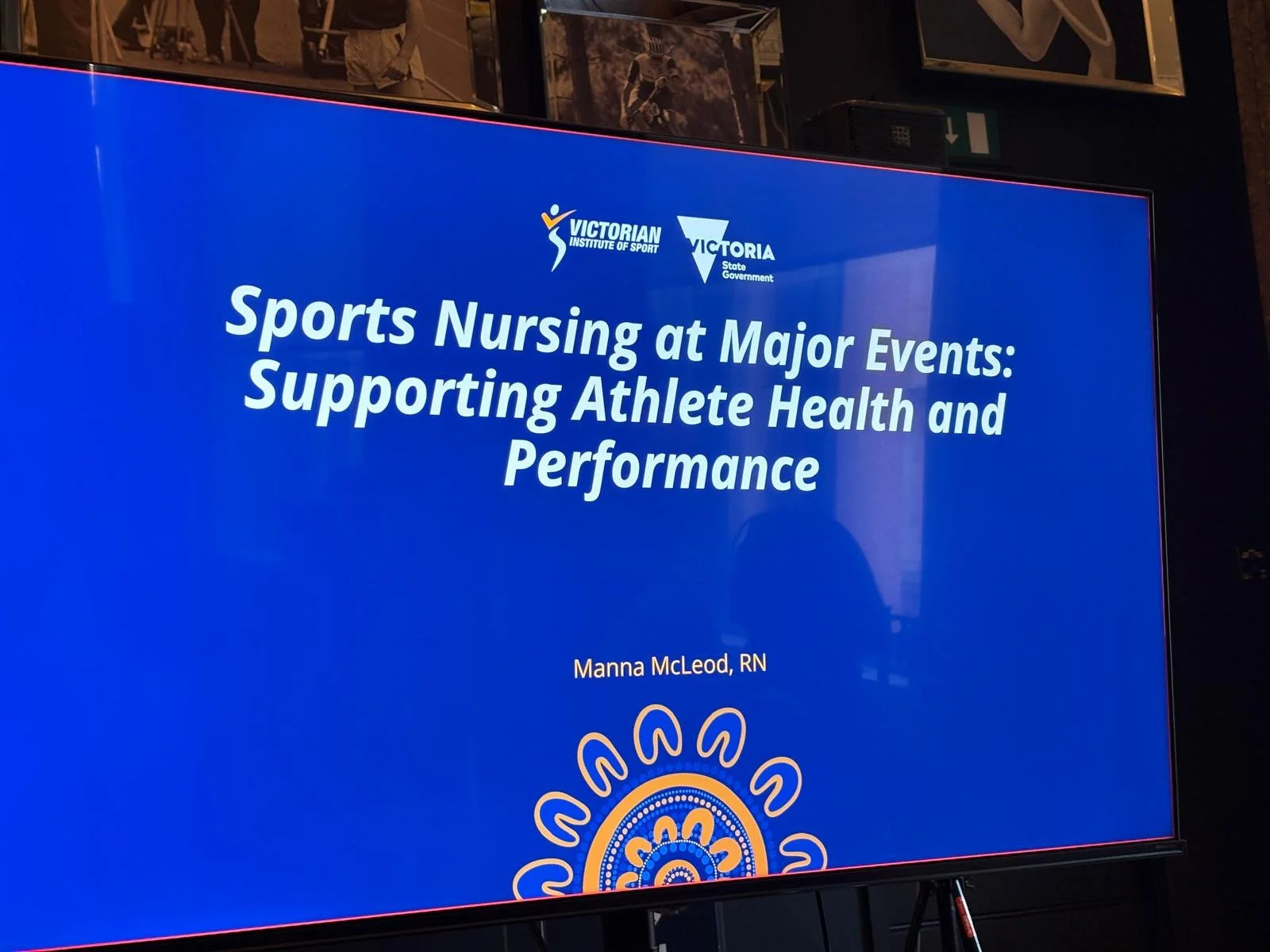
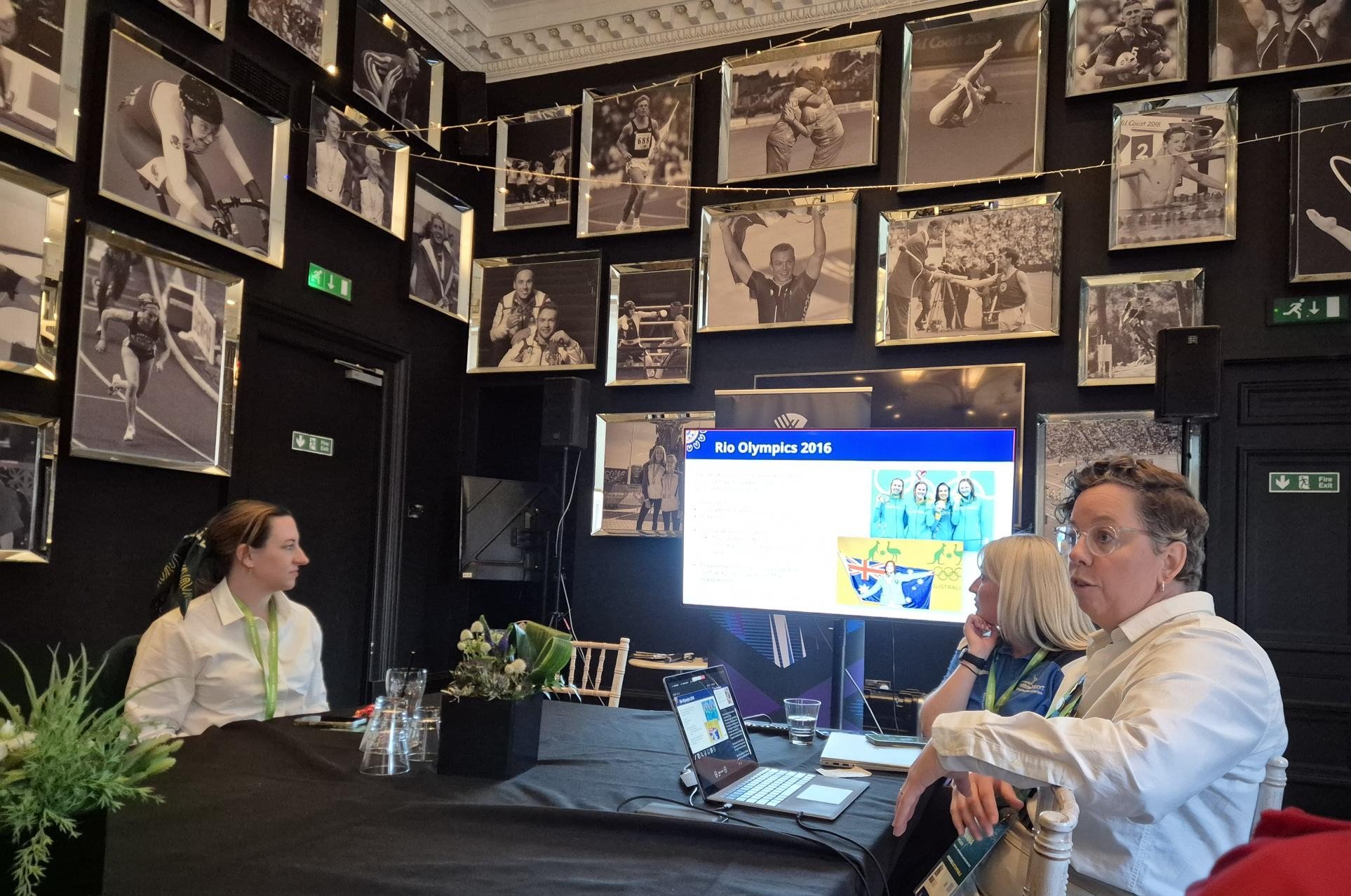
Using examples from the Australian Olympic Team, speakers demonstrated how nursing led infection control strategies transformed athlete health outcomes between Rio and Tokyo. During the Tokyo Olympics, nurses were responsible for:
PCR testing and rapid diagnostics
Illness management
Isolation protocols
Infection control planning
Athlete wellbeing checks
Coordination of clinical care
The results were significant, with dramatically reduced illness presentation rates and far fewer athlete days lost due to sickness.
The message was clear: nurses don't simply support medical teams. They make them more effective, allowing doctors and allied health professionals to focus on specialised clinical responsibilities while nurses coordinate the broader aspects of athlete health management.
The Critical Role of Nursing in Para Sport
Another major theme of the evening was the unique contribution nurses make in Paralympic and para-sport environments.
Unlike many traditional sports medicine settings, para-sport nursing requires expertise across a wide range of complex conditions and care needs, including:
Spinal cord injuries
Autonomic dysreflexia
Thermoregulation challenges
Pressure injury prevention
Bladder and bowel management
Feeding and swallowing support
Assistive technology and mobility equipment
Neurodiversity and mental health support
Speakers emphasised that successful para-sport care is built on partnership with athletes. Rather than assuming needs, nurses learn from athletes themselves and create personalised care plans that support performance while protecting health, dignity, and independence.
The introduction of detailed athlete profiling tools was highlighted as a best-practice approach, helping teams coordinate care, reduce risk, and improve consistency across camps, travel, and competitions
Sleep, Recovery and Performance
The evening concluded with a discussion on the importance of sleep in athlete performance and recovery. Sleep is critical for physical repair, cognitive function, learning, and overall wellbeing, making it one of the most important recovery tools in high-performance sport.
Speakers highlighted the difference between travel fatigue and jet lag, noting that while travel fatigue can often be resolved with a good night's sleep, jet lag requires more deliberate management when crossing multiple time zones.
Key strategies to support sleep and recovery included:
Strategic exposure to daylight to help adjust body clocks.
Timing meals to align with the destination time zone.
Using exercise to promote healthy sleep patterns.
Practicing good sleep hygiene, including limiting screen time, creating a dark sleep environment, and maintaining consistent routines.
Managing caffeine intake to balance performance benefits with recovery needs.
A key takeaway was that nurses play an important role in helping athletes develop healthy sleep habits, particularly during travel and major competitions. The discussion also recognised the importance of supporting coaches, medical staff, and carers, whose wellbeing and recovery are equally important in maintaining effective athlete care.
Ultimately, sleep should be viewed as a performance strategy, not just a recovery tool, with effective sleep management helping athletes arrive at competition healthy, prepared, and ready to perform
Developing the Next Generation
Discussion focused on how sports nursing can continue to grow presented from a sports physician perspective stressed that future sports nurses need:
Strong foundational nursing skills
Diverse clinical experience
High-level communication abilities
A willingness to volunteer and gain experience
Exposure to multidisciplinary sporting environments
Understanding of athlete and team culture
Mentorship, practical exposure, and continual professional development were all identified as critical components of preparing the next generation of sports nursing leaders.
More Than Clinical Skills
Perhaps the strongest message of the evening was that the greatest contribution of nurses often extends beyond clinical procedures.
Nurses bring:
Empathy
Relationship-building skills
Care coordination expertise
Communication and advocacy
Calm decision-making under pressure
These qualities help athletes feel supported, safe, and understood, particularly during injury, illness, travel, and major competition periods.
As one speaker noted, high-performing multidisciplinary teams are not defined by rigid professional boundaries. Their success comes from collaboration, where each discipline amplifies the strengths of the others.
Looking Ahead
The future of sports nursing is increasingly bright. With the development of specialist education programs, growing international collaboration, and expanding recognition of the nursing role in high performance sport, the profession is entering a new era.
The challenge now is turning vision into reality: building sustainable pathways, creating global standards, and ensuring future nurses have the skills, confidence, and opportunities to thrive in high-performance sport.
If the enthusiasm and expertise shared during the INNS Global Network Evening are any indication, sports nursing is well positioned to become an essential pillar of athlete health and performance worldwide